

The Culturally Responsive Schooling (CRS) rubrics are designed to help schools and districts learn about key aspects of cultural responsiveness and to assess their current levels of CRS engagement through a series of stakeholder self-assessment. We purposefully distinguish between a rubric, which provides concrete descriptions of what each level of engagement looks like, and a survey, which typically includes a scale of agreement or frequency, without rich descriptors for each level. Rubrics are more useful than surveys for learning and improvement because they can both identify current levels of practice and detail next steps for growth.
The CRS rubrics (and CRS resources) are organized around four principles identified in the Culturally Responsive-Sustaining Education (CR-SE) Framework developed by the New York State Department of Education in 2018 (www.nysed.gov/crs/framework) which represent central areas of educators' work. The CR-SE frameworks were themselves inspired by the four high leverage strategies that emerged from Buffalo Public Schools’ work on Culturally and Linguistically Responsive Education.
The Four CRS Rubric Topics
The four CRS rubrics characterize the essential dimensions of the four principles of cultural engagement:
A Welcoming and Affirming School Environment which reflects the physical and social climate of the school affirms and values the range of identities of the school community.
High Expectations and Rigorous Instruction which creates learning conditions that are academically challenging and intellectually demanding, while also considering the different ways that students learn. Instruction includes opportunities to use critical reasoning, take academic risks, and leverage a growth mindset to learn from mistakes. Messages encourage positive self-image and empowerment to succeed.
Inclusive Curriculum and Assessment which provides the opportunity to learn about perspectives beyond one’s own experiences and elevates historically marginalized voices. It includes opportunities to learn about power, bias, and inequity and empowers learners to be agents of positive social change.
Ongoing Professional Learning for adults which creates continual opportunities for school community members to develop and sharpen a critically conscious lens toward instruction, curriculum, assessment, history, culture, and institutions.
WAYS YOUR SCHOOL OR DISTRICT CAN USE THE CRS RUBRICS
There are three major ways you can consider using the rubrics.
- As the Basis for Professional Learning Discussions.
- You can distribute electronic or paper copies of one or multiple of the rubrics to school faculty or district administrators during a professional development session and discuss the elements contained in the rubric and the progressions in each area. This will provide participants with familiarity about specific elements of CRS practice and what developmental growth looks like. A guide for facilitating professional development using the rubrics is here.
- For Groups (e.g. teams or departments, etc.) to Learn About and Assess Their Current Culturally Responsive Practices.
- You can use the group version of one or more of the rubrics to ask participants to meet, discuss, assess, and record where they believe the school or a sub-unit (grade range, grade level, subject area, etc.) are in their current levels of CRS practice. Use the Register option to gain CRS.IDs to record group rating and generate Reports to identify areas of future focus and to explore the alignment and/or differences of the perspectives of different groups.
- For Individuals to Learn About and Assess Their Current Culturally Responsive Practices.
- If you are confident that you can get strong participation, you can use the rubrics as individual surveys. For this reason, we have provided an option to complete the rubrics by individual respondents. If you choose this option, please be diligent to ensure that the results are representative of the desired group, especially since cultural responsiveness emphasizes gaining the views of minority and marginalized members of your community. Use the Register option to gain CRS.IDs to record individual ratings and generate Reports to identify areas of future focus and to explore the alignment and/or differences of perspectives.
Finally, regardless of which option you choose, please consider the appropriate ways to use the rubrics. If you want to encourage candor in the people you ask to complete them, you should respect their confidentiality and use the results for learning and growth, rather than accountability.
TAILORED RUBRICS FOR DIFFERENT PERSPECTIVES
There are separate rubrics for district leaders, school leaders, teachers, and students. The rubric for parents/guardians combines the three relevant areas into a single rubric. The key features of the rubrics are described below: For each rubric, you can gather the perspectives of multiple education partners (school leaders, teachers, students, parents, and district leaders) as follows:
|
Rubric Topic / Category
|
Education Partner | ||||
|---|---|---|---|---|---|
| District Leaders | School Leaders | Teachers | Students | Parents / Caregivers | |
| A Welcoming and Affirming School Environment is where the school community is represented and all cultural identities are affirmed and valued. | Applicable | Applicable | Applicable | Applicable | Applicable |
| Commitments - The extent of school community members' dedication to culturally responsive practices across the school experience | |||||
| School Environment Reflects Students & Community | Applicable | Applicable | Applicable | Applicable | |
| Classroom Environment Affirms Students' Identities & Accomplishments | Applicable | Applicable | Applicable | ||
| Hiring/Retention Reflects School Diversity | Applicable | Applicable | |||
| Review & Update District Policies about Students | Applicable | ||||
| Empowerment - School practices include all school community member voices | |||||
| Home Communications are Inclusive & Accessible | Applicable | Applicable | Applicable | Applicable | |
| Student & Family Input on School & Classroom Culture is Encouraged | Applicable | Applicable | Applicable | ||
| School Encourages Linguistic Diversity | Applicable | Applicable | Applicable | ||
| Relationships - The quality of connections amongst school community members | |||||
| School Values Relationship Building | Applicable | Applicable | |||
| Students are Comfortable Discussing Broader Social Issues With Teachers | Applicable | Applicable | |||
| School Fosters Strong Relationships Among Students | Applicable | ||||
| Teachers Foster an Empathetic Environment for Students | Applicable | ||||
| School has a Policy for Welcoming Families | Applicable | Applicable | |||
| District Fosters Authentic Collaboration Amongst Teachers, Families, & Community Members | Applicable | ||||
| Collaboration - The extent of cooperation amongst school community members | |||||
| School-Wide Expectations Are Collaborative & Equitable | Applicable | Applicable | Applicable | ||
| Students Collaborate to Create the Physical Classroom Environment | Applicable | Applicable | |||
| School Rules & Expectations are Clear & Fair | Applicable | ||||
| School Encourages Student Participation in School Activities | Applicable | Applicable | |||
| School Encourages Family Involvement & Participation | Applicable | Applicable | |||
| A learning environment with High Expectations and Rigorous Instruction is challenging and prepares and empowers students. | Applicable | Applicable | Applicable | Applicable | Applicable |
| Commitments - The extent of school community members' dedication to culturally responsive practices across the school experience | |||||
| School Has Equity-Specific Goals & Metrics | Applicable | Applicable | Applicable | ||
| School holds High Expectations for All Students | Applicable | Applicable | Applicable | Applicable | |
| Instruction is Differentiated to Meet Varied Student Needs | Applicable | Applicable | |||
| Ideas about Equity are Incorporated into Classroom Lessons | Applicable | Applicable | Applicable | Applicable | |
| Teachers Engage With Students During Classroom Visits | Applicable | ||||
| Empowerment - School practices include all school community member voices | |||||
| Leaders Have High Expectations for Rigor of Instruction | Applicable | Applicable | |||
| Emphasis of Instructional Expectations | Applicable | ||||
| All Students Participate in Class | Applicable | Applicable | |||
| Teachers Seek Lesson/Learning Activity Input & Feedback from Students | Applicable | Applicable | |||
| Instructional Strategies for Equity | Applicable | ||||
| Teachers Hold High Beliefs About Student Capability | Applicable | ||||
| Relationships - The quality of connections amongst school community members | |||||
| Adults Develop Strong Relationships with Students | Applicable | Applicable | Applicable | ||
| Collaboration - The extent of cooperation amongst school community members | |||||
| Teachers & Students Collaborate to Develop Class Rules & Expectations | Applicable | Applicable | |||
| Facilitate Structures for Teacher Collaboration | Applicable | ||||
| Students Share Responsibility for Learning | Applicable | Applicable | Applicable | ||
| Children are Interested in School | Applicable | ||||
| School Staff Collaborate with Parents for Student Success | Applicable | Applicable | Applicable | ||
| Inclusive Curriculum and Assessment provides the opportunity to learn about multiple perspectives, elevates historically marginalized voices, and empowers learners to make positive social change. | Applicable | Applicable | Applicable | Applicable | Applicable |
| Commitments - The extent of school community members' dedication to culturally responsive practices across the school experience | |||||
| Curricular Resources Contain Diverse Perspectives | Applicable | Applicable | Applicable | Applicable | |
| Curricular Adjustments Meet Student Needs | Applicable | Applicable | Applicable | ||
| Social & Emotional Learning Infused into School Day | Applicable | Applicable | Applicable | Applicable | Applicable |
| Student Involvement in Data-Informed Decision-Making | Applicable | Applicable | |||
| Use Multiple Measures to Assess School Climate | Applicable | ||||
| Empowerment - School practices include all school community member voices | |||||
| Multiple Data Sources Inform Planning | Applicable | Applicable | Applicable | ||
| Curricula/Assessments Connect to Students' Lives | Applicable | Applicable | Applicable | ||
| Authentic Demonstrations of Student Learning | Applicable | Applicable | |||
| Analyzing Student Data Across Areas | Applicable | ||||
| Relationships - The quality of connections amongst school community members | |||||
| Local Field Trips Connect to Community | Applicable | Applicable | |||
| Student Interests Reflected in Lessons | Applicable | Applicable | |||
| Partnering with Education Experts | Applicable | ||||
| Collaboration - The extent of cooperation amongst school community members | |||||
| Parent/Community Collaboration on Curriculum & Assessment | Applicable | Applicable | Applicable | Applicable | |
| Student Projects are Collaboratively Developed | Applicable | Applicable | |||
| Ongoing Professional Learning creates continual opportunities to develop a critically conscious lens. | Applicable | Applicable | Applicable | None | None |
| Commitments - The extent of school community members' dedication to culturally responsive practices across the school experience | |||||
| Professional Learning on Infusing Cultural Responsiveness Into Practice | Applicable | Applicable | Applicable | ||
| Professional Learning on Using a Range of Data | Applicable | Applicable | Applicable | ||
| Familiarizing Staff with Community Context | Applicable | Applicable | |||
| Professional Learning on Incorporating Equity into Lessons | Applicable | Applicable | |||
| Sharing Research-Based Culturally Responsive Practices | Applicable | ||||
| Empowerment - School practices include all school community member voices | |||||
| Access to External Culturally Responsive Professional Learning | Applicable | Applicable | |||
| Professional Learning on Enrichment & Remediation for Students | Applicable | Applicable | |||
| Training of Instructional Leaders | Applicable | ||||
| Relationships - The quality of connections amongst school community members | |||||
| Providing Training on Self-Identity & Bias | Applicable | ||||
| Exploring Self-Identity & Bias | Applicable | Applicable | Applicable | ||
| Leveraging Community Relationships | Applicable | Applicable | |||
| Professional Learning on Building Relationships with Students | Applicable | Applicable | |||
| Leaders provide Support & Guidance on Discussing Social Issues with Students | Applicable | Applicable | |||
| Collaboration - The extent of cooperation amongst school community members | |||||
| Sharing of Culturally Responsive Practices | Applicable | Applicable | |||
| Opportunities to Grow as Culturally Responsive Professionals | Applicable | Applicable | Applicable | ||
For a more detailed description of each rubric, click to expand the table.
Each of the four rubrics contains about 8-10 items that cover the central components of the rubric topic, organized into four areas: commitments, empowerment, relationships, and collaboration. Some of the items are specific to a particular education partner, while others ask about the same topic from the perspectives of multiple groups, which allows you to compare the perspectives of different people about the same topic.
RUBRIC PROGRESSIONS SHOW PATHWAYS TO DEEPER CULTURAL RESPONSIVENESS
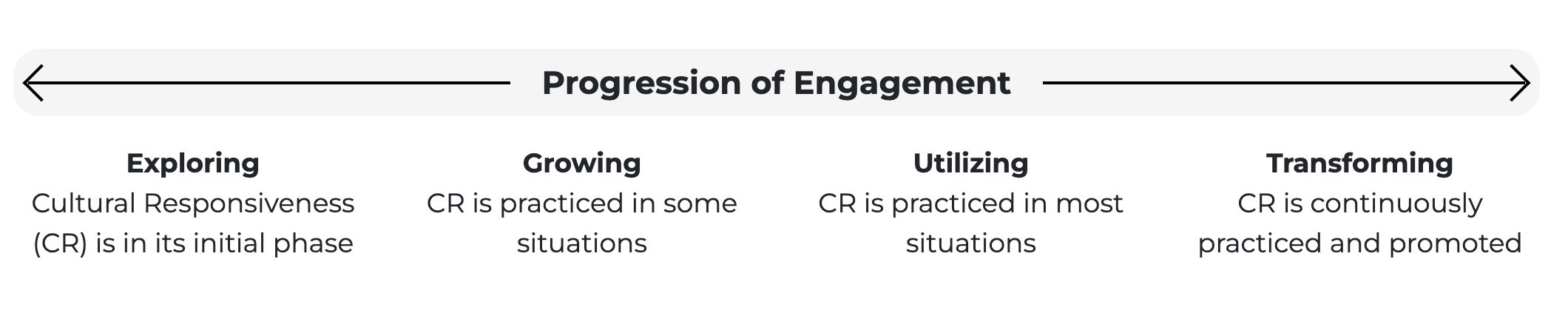
Each rubric item starts with 1-2 guiding questions that are designed to stimulate your thinking /conversation about that particular topic in your school/district. After the guiding question is a Progression of Engagement that asks you to assess your or your school/district’s current level of engagement with that component. The progressions detail what progressively deeper practices look like on each rubric item, allowing you to envision a concrete pathway of more robust practices.
The Progression goes from Exploring to Growing to Utilizing to Transforming, like this:
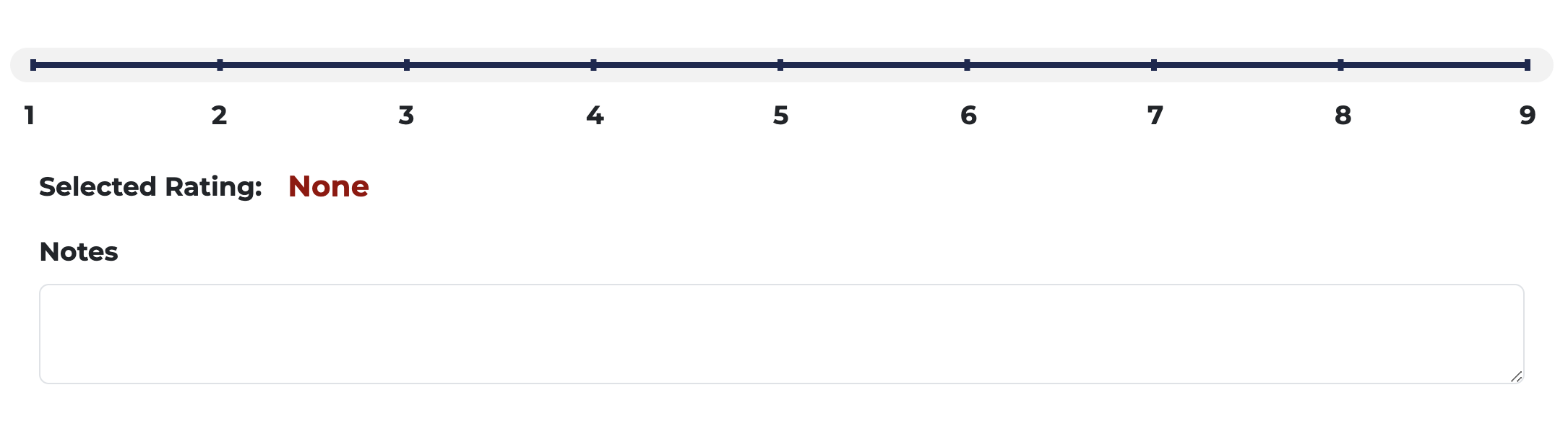
Below the progression for each item is a nine-point scale where 1 is Early Exploring, 2 is Solid Exploring, 3 is between Exploring and Growing, 4 is Solid Growing, etc. You can use a slider to select your rating on the nine-point scale. Below the rating is a place for you to take notes if you wish. The notes will be saved or printed when you submit the rubric.